Internet Archive - Featured Articles
Designing a narrative layer for archival content that allows users to curate archival materials into contextual stories while preserving the integrity and trust of the archive.
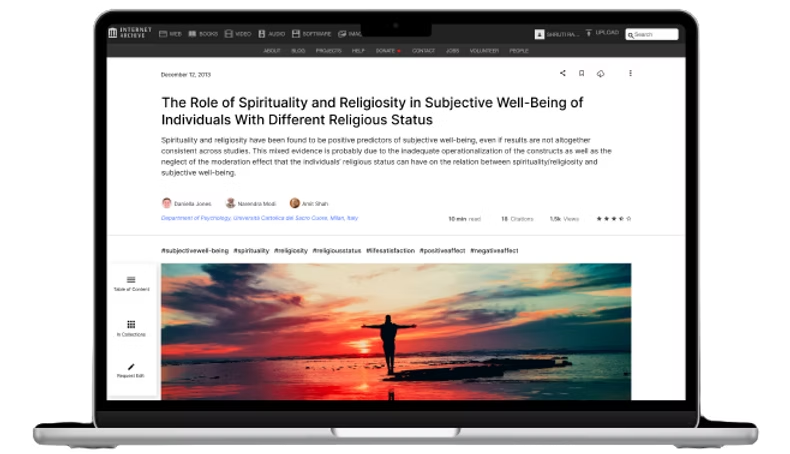
The Challenge
Users can locate content on archive.org, but once found, content often lacks context explaining why it matters, narrative structure that supports learning, and a way to share interpretations within the platform. Core user pain: 'I can find primary sources, but I still need to leave the Archive to explain them to others.' This gap forces users to rely on external tools, fragmenting workflows and limiting engagement within the archive itself. Key constraints: Archival content cannot be altered, trust and credibility must be preserved, the solution must scale to millions of items, and the UI must align with archive.org's existing design system.
My Approach
Explored how a narrative-driven feature, called Featured Articles, could allow users to curate archival materials into contextual stories. Conducted 8 semi-structured user interviews with researchers, librarians, and frequent Archive users. Performed archive usage analysis, task-flow walkthroughs of current archive.org experience, and competitive review of annotation and narrative tools. Key insights revealed: (1) Search ≠ Understanding—users could find content but struggled to interpret it without external context, (2) Context Lives Outside the Archive—researchers exported links into external documents, and (3) Users Want Guidance, Not Just More Content—participants preferred curated paths over infinite exploration. Reframed the problem: How might we allow users to create and share contextual narratives using archival content—without compromising archival integrity or trust?
Information Architecture
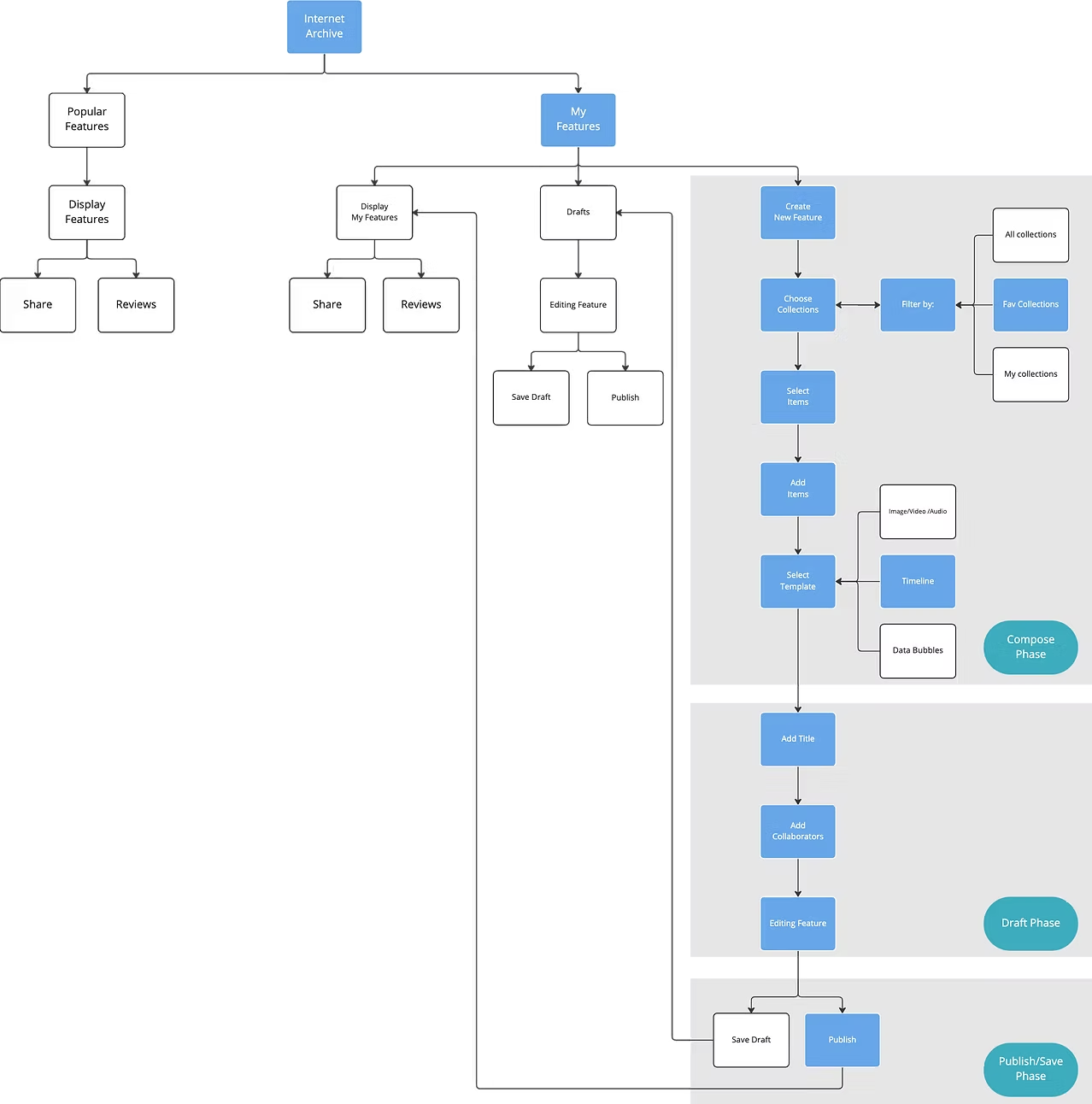
Complete app structure showing navigation hierarchy, features, and user flows from onboarding to daily interactions
Site Map
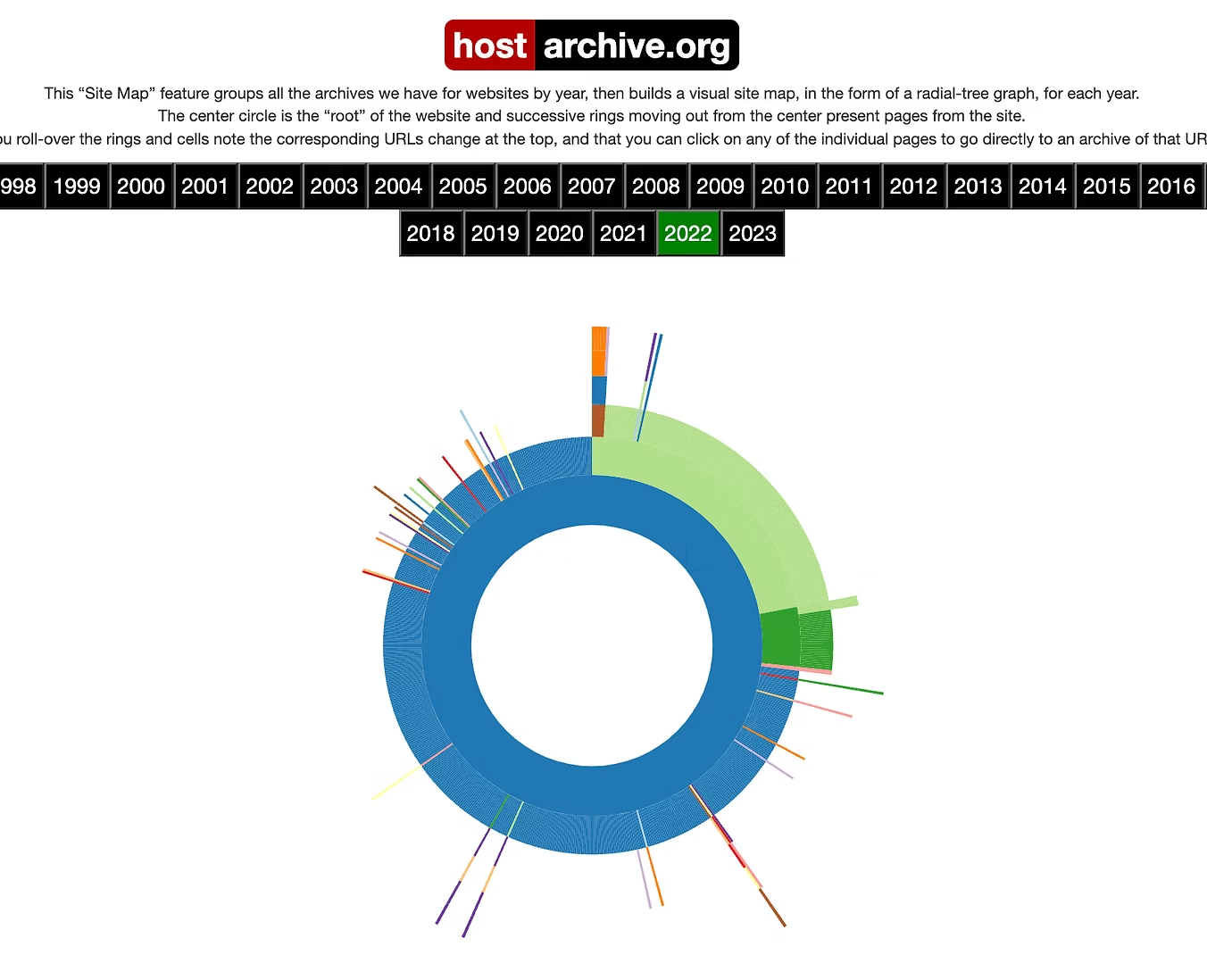
Detailed site map showing the hierarchical structure of the Internet Archive app
Collection Page
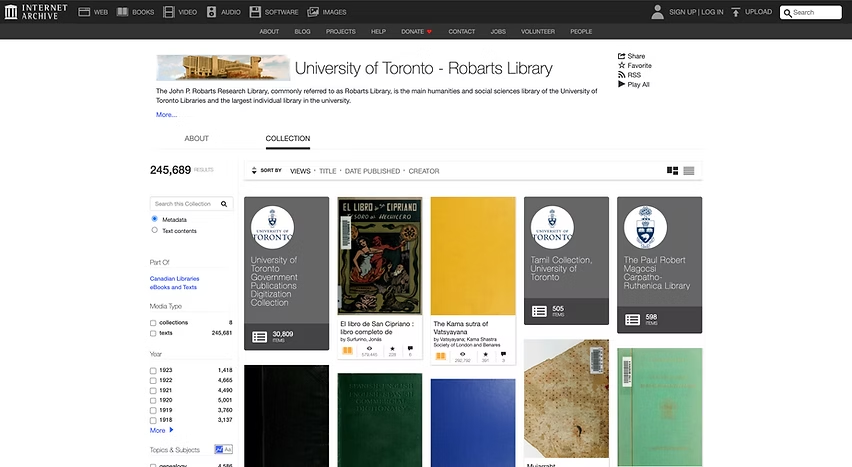
Example of a collection page within the Internet Archive app, showcasing the user interface and content organization
Outcome & Impact
Delivered a validated concept for narrative-driven archival engagement that preserves archival integrity while enabling community-driven storytelling. The Featured Articles feature allows users to: select items from Archive collections, arrange them into a logical sequence, and add introductions, transitions, and explanations. User testing showed participants understood the narrative format immediately, spent longer engaging with curated content, and valued keeping interpretation within the Archive. Stakeholder feedback from Internet Archive designers supported the non-invasive architecture, and academic stakeholders saw strong educational value. The project provides a strong foundation for balancing usability, credibility, and storytelling while demonstrating senior-level ability to translate abstract research into scalable systems and design under real-world constraints.
Technical Details
Research & Discovery
Conducted 8 semi-structured user interviews with researchers and librarians who contextualize archival materials, frequent Internet Archive users, and graduate students working with primary sources. Performed archive usage and demographic analysis to understand current user behaviors. Created task-flow walkthroughs of current archive.org experience to identify friction points. Completed competitive review of annotation and narrative tools to understand existing solutions. Research revealed three critical insights: users could find content but struggled to interpret it, researchers exported links to external tools (Archive loses engagement at interpretation stage), and users preferred curated paths over infinite exploration (narrative structure matters more than volume).
Design Decisions & Tradeoffs
Made two critical design decisions with intentional tradeoffs: (1) Linear Narrative Over Free Annotation—explored inline annotations but found they overwhelmed users. Chose less flexibility for more clarity and readability. (2) Editorial Structure vs. Social Feed—Featured Articles follow an editorial format rather than social posting. Chose slower creation process for higher trust and quality. Information architecture: Featured Articles exist as a new content type integrated into existing Archive navigation with multiple entry points. Clear labeling and consistent UI patterns minimize learning curves and reduce discoverability friction.
Prototyping & Validation
Built and tested prototypes focusing on: narrative readability, discoverability of Featured Articles, and user understanding of content vs. commentary distinction. Key findings: users understood the narrative format immediately without explanation, participants spent significantly longer engaging with curated content compared to standard search results, and researchers strongly valued keeping interpretation within the Archive ecosystem. Stakeholder feedback: Internet Archive designers supported the non-invasive architecture that preserves original content, academic stakeholders identified strong educational value, and feedback emphasized the importance of governance and moderation needs for future implementation.
Lessons Learned
Access without context limits impact—discovery alone doesn't guarantee understanding
Constraints often sharpen better design decisions—archival integrity requirements led to clearer separation of content and commentary
Trust is a UX problem, not just a content problem—visual distinction and labeling are essential
Linear narratives provide more clarity than free-form annotations for most users
Users prefer curated paths over infinite exploration when learning
Editorial structure builds trust more effectively than social feed formats
Context that lives outside the platform fragments workflows and reduces engagement
Scalability must be considered from day one when designing for archival systems
Multiple entry points reduce discoverability friction in complex information systems
Moderation and governance are critical for community-contributed content
Senior-level insight: Translating abstract research into scalable systems requires balancing usability, credibility, and storytelling
Key Features
- Narrative creation: Select archive items and arrange them into logical sequences
- User commentary layer: Add introductions, transitions, and explanations
- Clear separation of content & commentary to preserve trust
- Archived content is visually distinguished from user-written context
- Metadata and citations remain visible on all archival items
- Featured Articles appear on collection pages, related item pages, and curated sections
- Discovery through stories instead of search-only experience
- Flexible for multiple audiences: researchers, educators, general users
- Linear narrative structure for clarity and readability
- Editorial format ensures high trust and quality
- Integrated into existing Archive navigation with multiple entry points
- Scalable system that works across millions of archival items
Want to Collaborate?
I'm always interested in new experiments, research collaborations, and pushing the boundaries of AI design.