Green Alert - Conscious Fashion Shopping
A human-centered, AI-augmented mobile app that empowers conscious clothing purchasing decisions by revealing environmental and ethical realities behind fashion products, transforming greenwashing awareness into actionable insights.
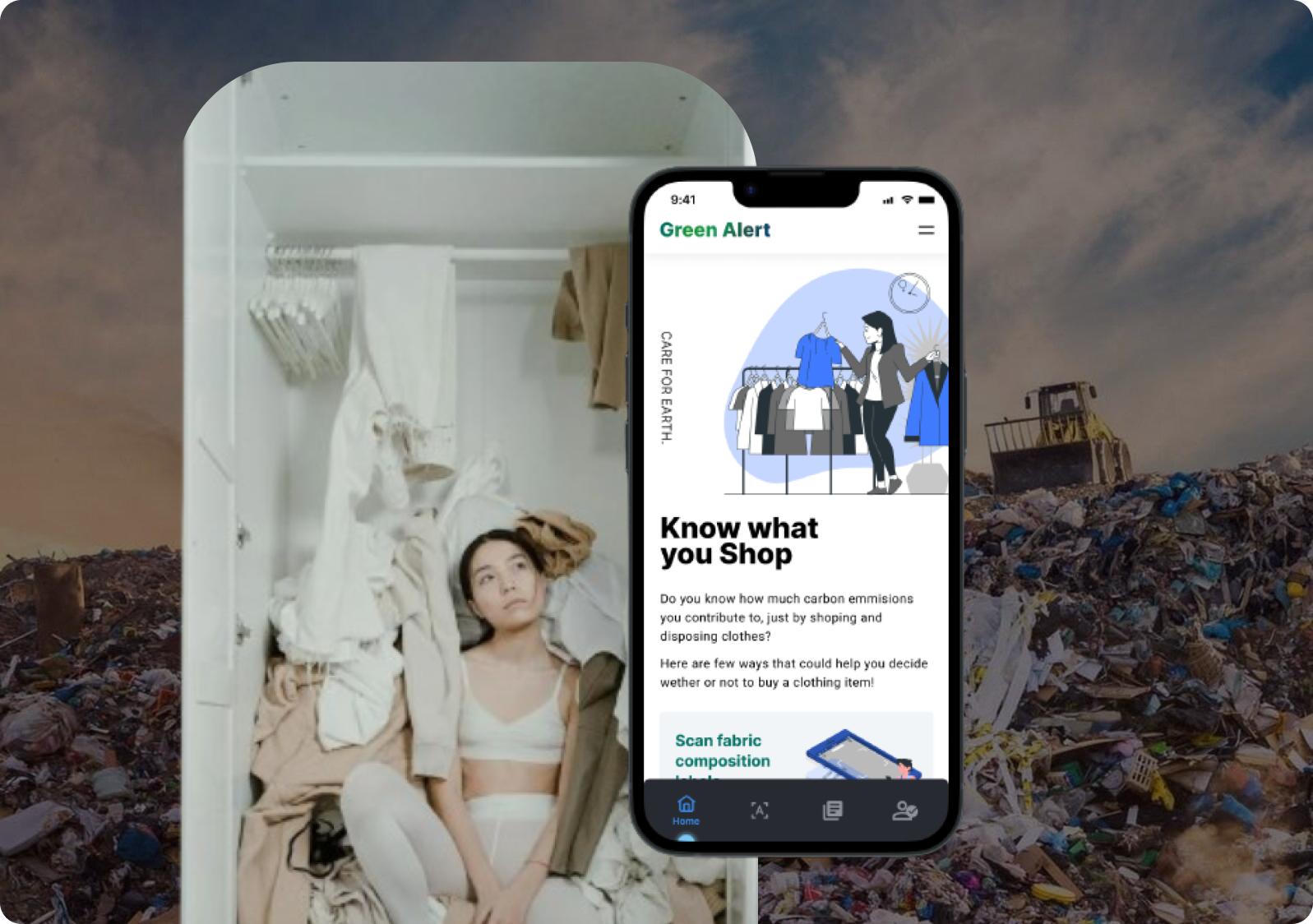
The Challenge
Fashion brands increasingly use sustainability language like 'eco-friendly' and 'conscious collection' without meaningful evidence, obscuring unethical labor practices and environmental harm. Research shows consumers care about sustainability but lack clarity, time, and confidence to evaluate claims while shopping. The challenge wasn't just awareness—it was sense-making and decision-making under uncertainty. How might we help users make informed clothing purchases without removing their agency or claiming false certainty about complex ethical decisions?
Competitive Analysis - Identifying the Gap
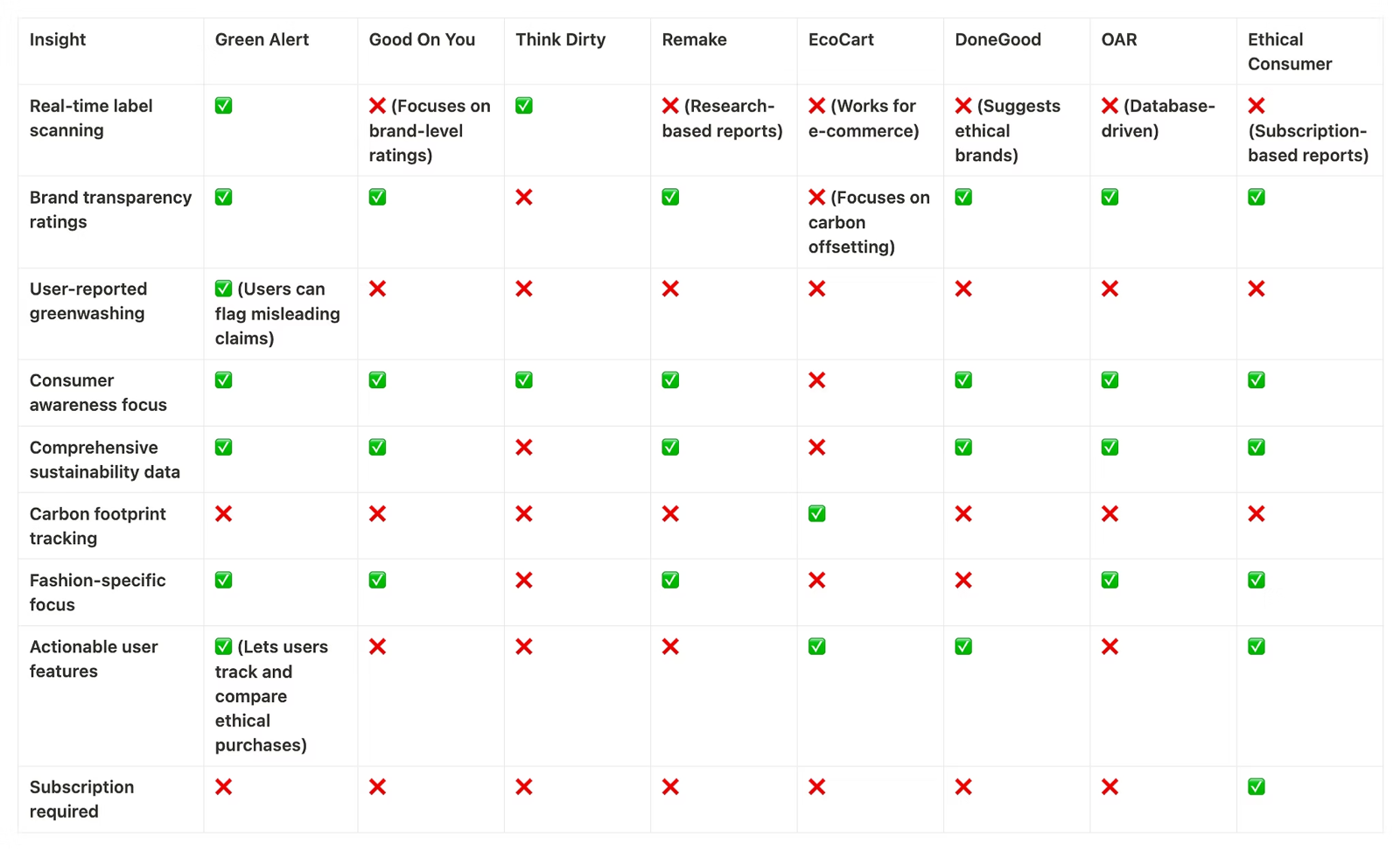
Systematic competitive analysis of 8+ platforms revealed Green Alert's unique value proposition: combining real-time label scanning with AI-powered greenwashing detection and user-reported transparency - capabilities no single competitor offered together. This analysis validated the product-market fit and strategic positioning.
My Approach
Led a two-phase strategic design evolution: Phase 1 focused on transparency-first UX, making hidden information visible through fabric composition, brand sustainability practices, ethical wage transparency, and certifications. Created a 60-brand database, conducted extensive competitive analysis across 8+ platforms, and ran iterative testing including pretotype validation and Wizard of Oz methodology. When Phase 1 revealed users trusted the information but still hesitated to act, I introduced Phase 2: AI-augmented decision support. Designed AI as an interpretive assistant (not an authority) that detects greenwashing signals, provides confidence indicators, ensures explainability, and maintains clear human-AI boundaries. The AI doesn't declare brands 'good' or 'bad'—it surfaces patterns, gaps, and uncertainty to help users think better at the moment of purchase.
Field Research - In-Store Shopping Experience
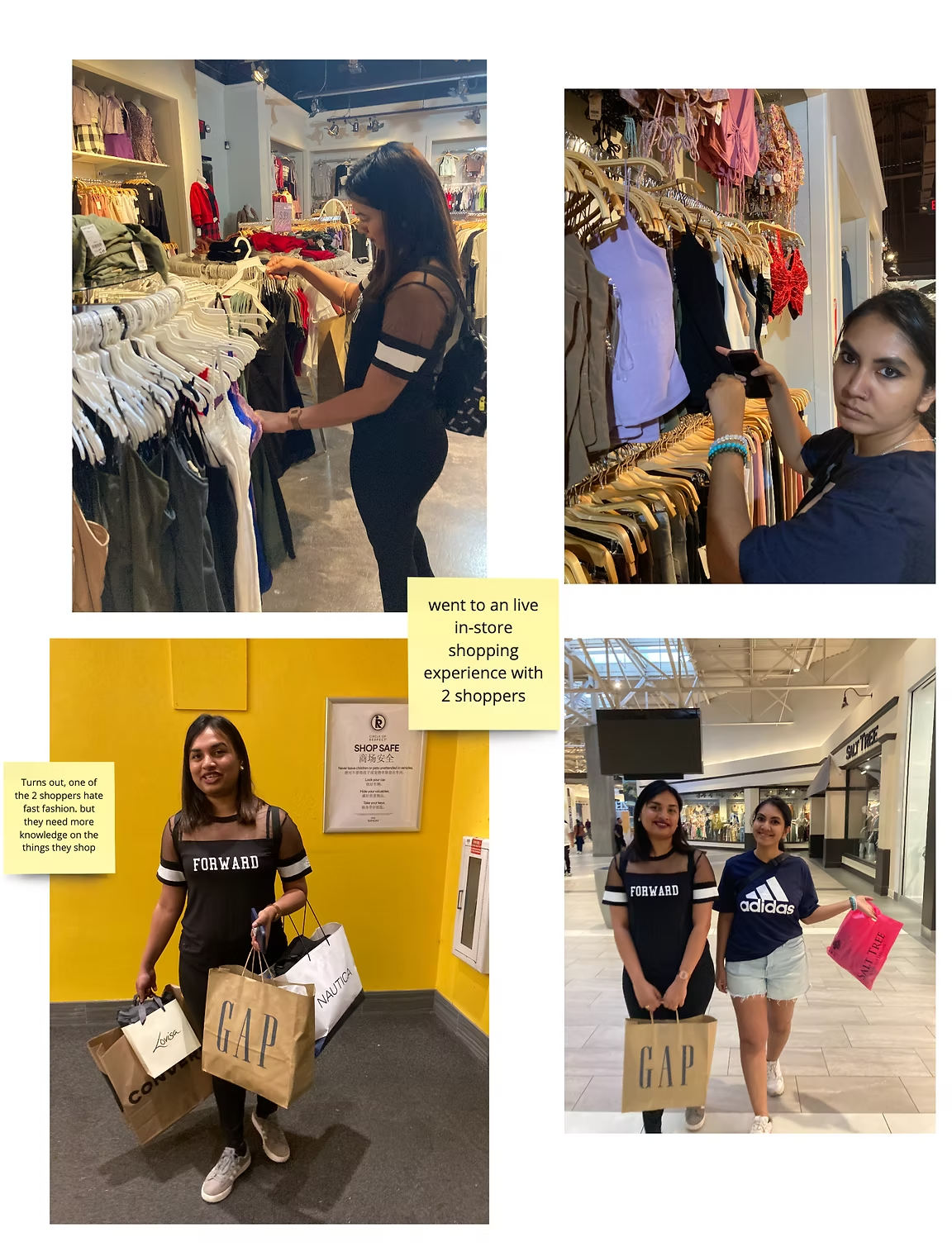
Contextual inquiry with shoppers in real retail environments to understand decision-making at point of purchase. Tested label scanning, information comprehension, and identified need for simplified sustainability data presentation.
Research Data - Biodiversity Impact Analysis
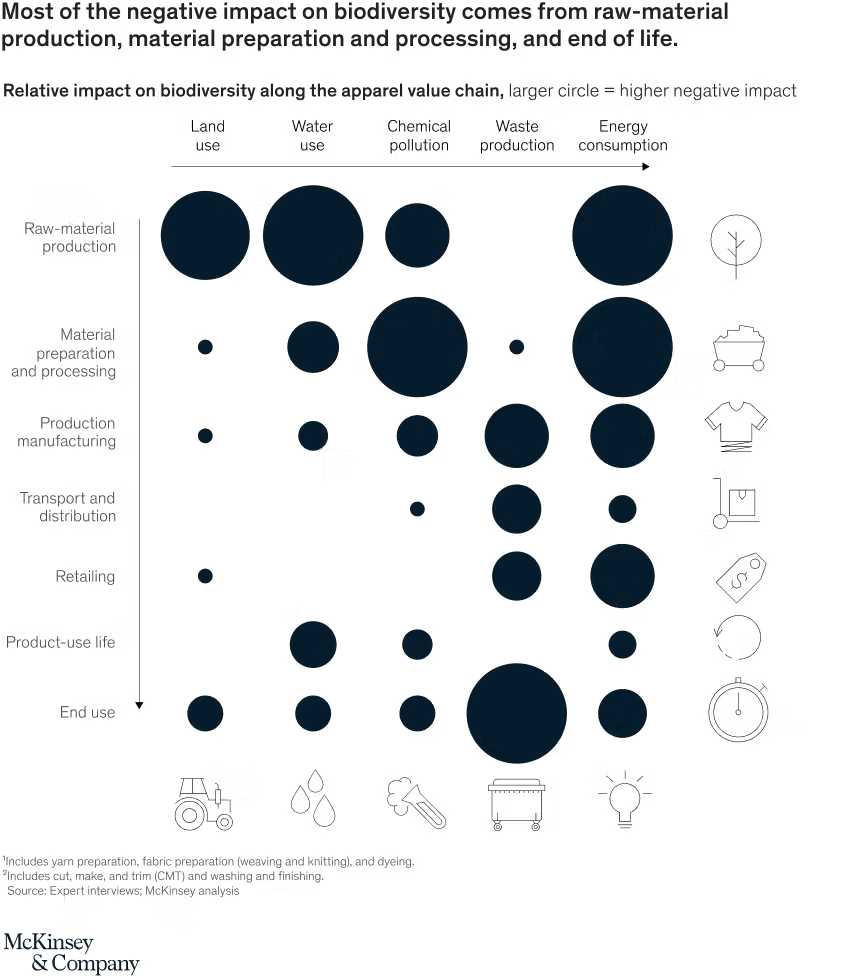
McKinsey research revealing that most negative impact on biodiversity comes from raw-material production, material preparation, and end of life. This data informed our decision to prioritize fabric composition and lifecycle information in the app's information architecture.
Behavior Change Opportunity
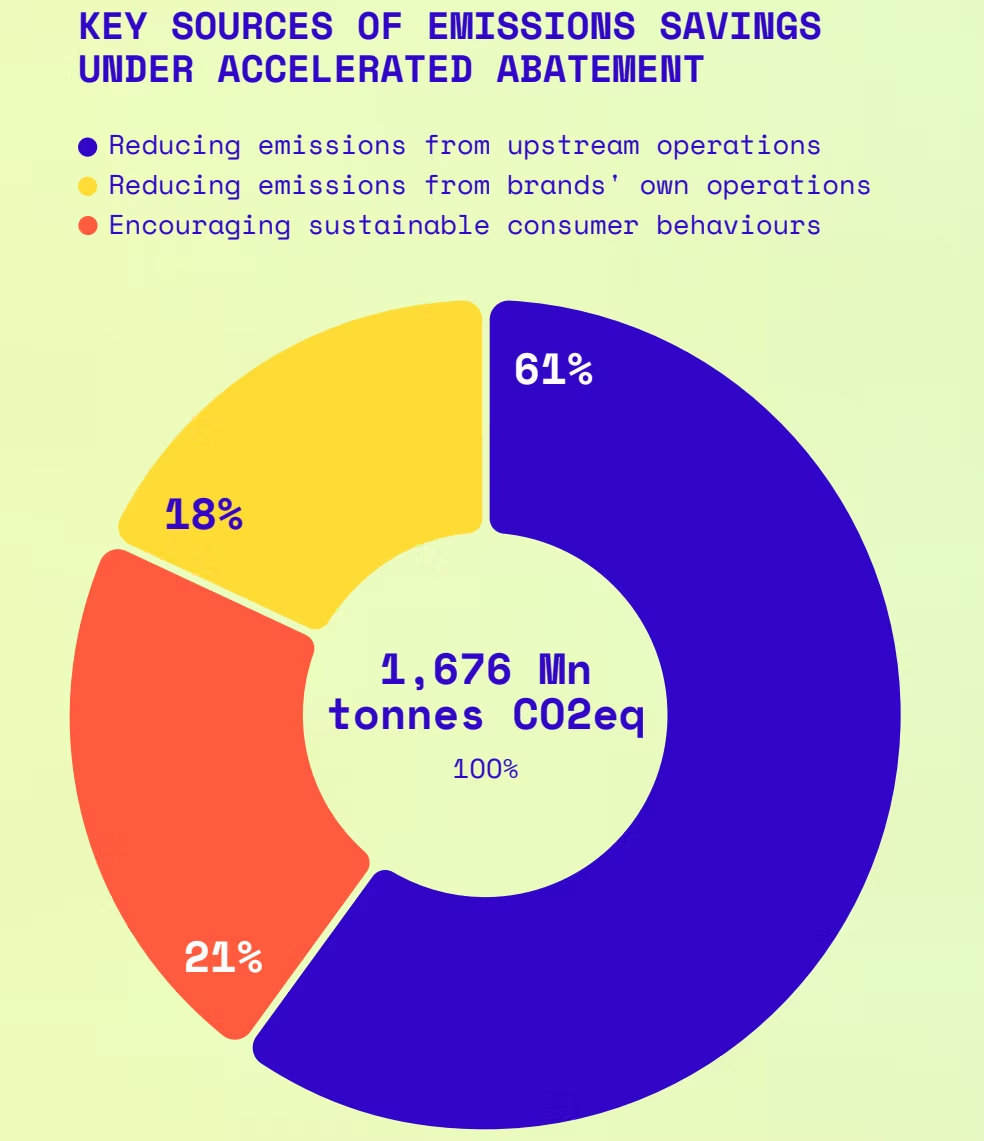
Research showing that 21% of potential emissions savings comes from encouraging sustainable consumer behaviors. This validated the strategic focus on empowering conscious purchasing decisions rather than just brand transparency - user behavior change is a critical lever for impact.
Outcome & Impact
Successfully demonstrated how AI can responsibly augment ethical decision-making. Users made decisions faster with greater confidence when AI communicated uncertainty clearly. Trust increased when the system avoided moral language and used signals instead of labels. The AI-assistive approach was accepted because it preserved human control while helping interpret complex sustainability data. Testing revealed that information architecture (sectioned content, simplified language, saved lists, brand libraries) mattered as much as AI capabilities. The project validates that ethical decision-making benefits from clarity and context, not automation—showing senior-level strategic thinking about when AI should augment versus replace human judgment.
Final Product Walkthrough
Interactive prototype demonstration showing the complete user flow: label scanning, sustainability information display, AI-powered greenwashing detection, brand comparison, and decision-making flow. The walkthrough highlights the iterative design refinements and demonstrates how Phase 2 AI capabilities seamlessly integrate with Phase 1 transparency features.
Technical Details
Strategic Research & Discovery
Conducted multi-method research: quantitative surveys (60% motivated by discounts, 50% prioritize aesthetics over ethics), desk research analyzing McKinsey sustainability reports and re/make Fashion Accountability data, qualitative user interviews, and systematic competitive analysis of 8 platforms (Good On You, Think Dirty, Fashion Revolution, etc.). Created evidence-based user personas and journey maps. Built initial brand database covering 60 fashion brands with verified sustainability metrics. Research revealed critical insight: users want to shop responsibly but feel overwhelmed—information alone doesn't drive behavior unless structured, comparable, and actionable.
Iterative Design & Testing Methodology
Phase 1: Ran pretotype testing with simple fabric composition scanning to validate concept. Version 2 introduced UI but revealed high cognitive load, unclear information hierarchy, and failed reward system assumptions. Iteratively refined based on user feedback: sectioned information architecture, simplified language, removed gamification, added navigation clarity. Phase 2: Introduced AI as decision-support layer after identifying gap between trust and action. Designed AI philosophy treating it as transparent reasoning aid, not black box authority. Tested confidence indicators, explainability interfaces, and human-AI boundary patterns to ensure users remained decision-makers.
AI Design Philosophy & Implementation
Designed AI with explicit ethical constraints: (1) Uses signals instead of labels to avoid over-confidence, (2) Shows confidence levels (high/medium/low) based on data availability and source reliability, (3) Provides 'Why am I seeing this?' explainability for every AI insight, (4) Never declares brands 'good/bad' or makes purchasing decisions, (5) Clearly distinguishes AI suggestions from user decisions. AI analyzes sustainability language, cross-references brand disclosures, identifies certification gaps, and surfaces inconsistencies—but always preserves user agency. This demonstrates senior-level understanding of when AI should augment human judgment in value-laden decisions versus automate tasks.
Lessons Learned
AI fails when it tries to replace judgment in complex, value-based decisions—augmentation beats automation
Information alone doesn't change behavior; structured, actionable, comparable insights do
Trust increases when AI communicates uncertainty clearly rather than claiming false certainty
Users accept AI assistance when framed as interpretive aid, not authoritative judge
Reward systems don't motivate behavior change as effectively as emotional clarity and actionable insights
Progressive disclosure reduces cognitive overload—show simple by default, complexity on demand
Competitive analysis across 8+ platforms revealed unique opportunity: real-time scanning + AI greenwashing detection
Iterative testing (pretotype → V2 → final) was essential—assumptions about user motivation failed early
Ethical sensitivity required avoiding moral language entirely; signals work better than verdicts
The human-AI boundary must be explicit and visible—users need to see where AI ends and their choice begins
Senior-level insight: Understanding when NOT to use AI is as important as knowing when to use it
Key Features
- Label/barcode scanning for instant product analysis
- AI-powered greenwashing signal detection with confidence levels
- Explainable AI—users can see 'why am I seeing this?' for every insight
- Progressive disclosure of sustainability data (fabric, wages, certifications)
- Alternative brand suggestions based on stronger ethical disclosures
- User reporting system for crowdsourced greenwashing flagging
- Saved lists and brand library for personal tracking
- Real-time AI monitoring with clear human-AI boundaries
- 60-brand sustainability database with verified data sources
- Context-aware recommendations that preserve user agency
Want to Collaborate?
I'm always interested in new experiments, research collaborations, and pushing the boundaries of AI design.